A deeper look at what it is and what it measures.
The Neurozone® Personal Assessment provides insight into an individual’s current level of psychological resilience and a battery of learnable neurobehaviors associated with resilience and the capacity for High Performance.
This page provides more detailed information about the assessment, including its structure, statistical properties, scientific foundations, applications, and supporting technical documentation.
For a general overview of the Neurozone® Personal Assessment, visit our main Personal Assessment page.


What It Is
The Neurozone® Personal Assessment is an online, self-report assessment designed to measure an adult individual’s current level of psychological resilience and identify learnable neurobehaviors that can be developed to enhance resilience and the capacity for High Performance.
At its core are two components: the Neurozone® Resilience Index (NRI), a peer-reviewed 28-item measure of psychological resilience, and a battery of 59 learnable neurobehaviors. These neurobehaviors include behaviors, cognitive states, and emotional states that have demonstrated and/or theoretical relationships with resilience. They are organized across Neurozone®’s five Domains of High Performance. The assessment does more than show where an individual currently stands. Using the Neurozone® High Performance Code, it considers both the individual’s responses and the statistical relationship of each neurobehavior with the NRI. This allows the Personal Report to identify areas to commend and maintain, as well as prioritized opportunities for development.
Importantly, the Neurozone® Personal Assessment is not a personality assessment, clinical diagnostic or screening tool, or a measure of cognitive ability or professional competencies. It is designed to provide an actionable view of current psychological resilience and the learnable neurobehaviors that may help an individual develop it.
What It Measures
The Neurozone® Personal Assessment measures two core areas: an individual’s current level of psychological resilience and a battery of 59 learnable neurobehaviors associated with resilience and the capacity for High Performance.
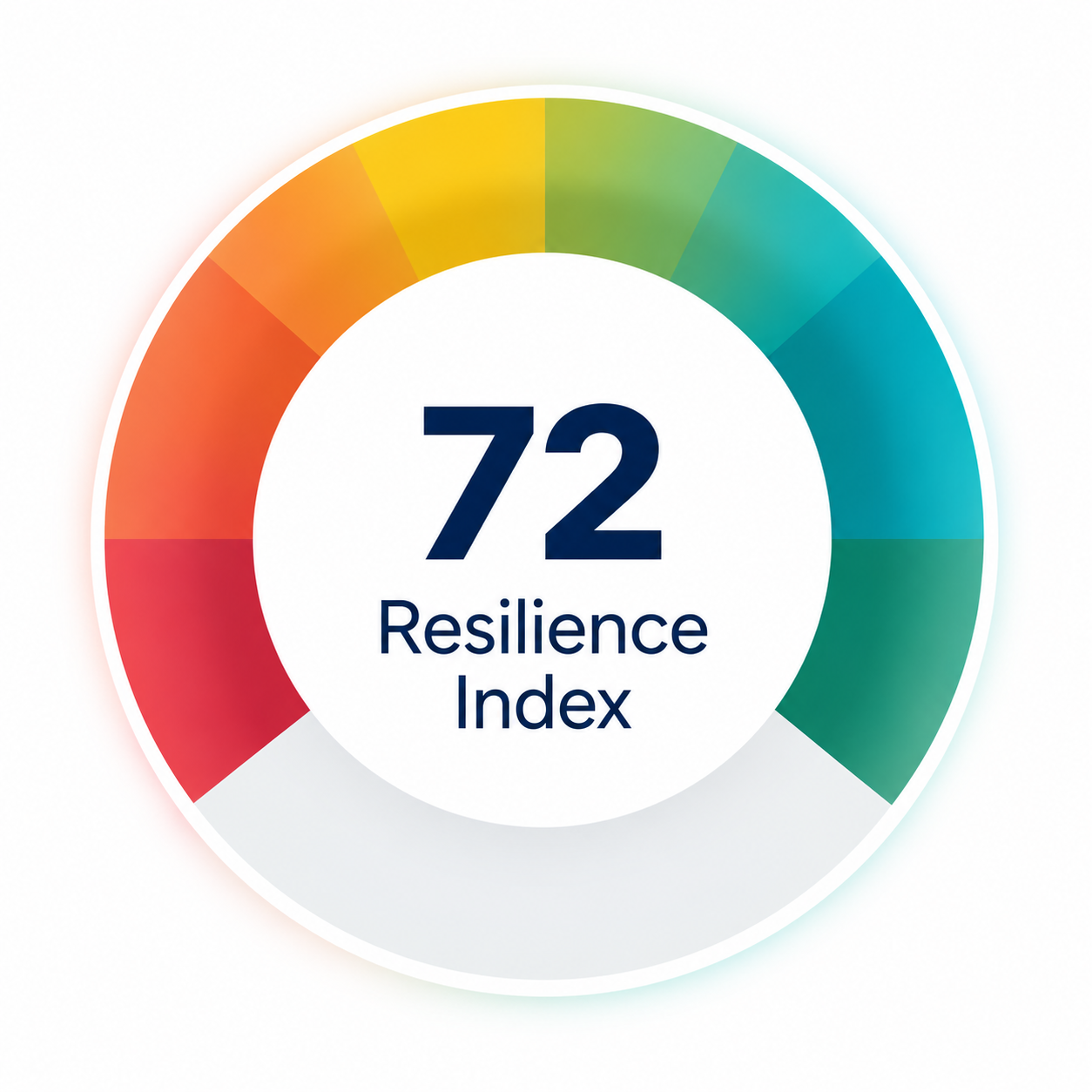
Psychological resilience is measured through the Neurozone® Resilience Index (NRI). The NRI provides a score from 0 to 100, representing an individual’s current level of resilience. Because resilience is considered a dynamic capacity, the score reflects the individual’s resilience at the time of assessment and may change over time and circumstance.
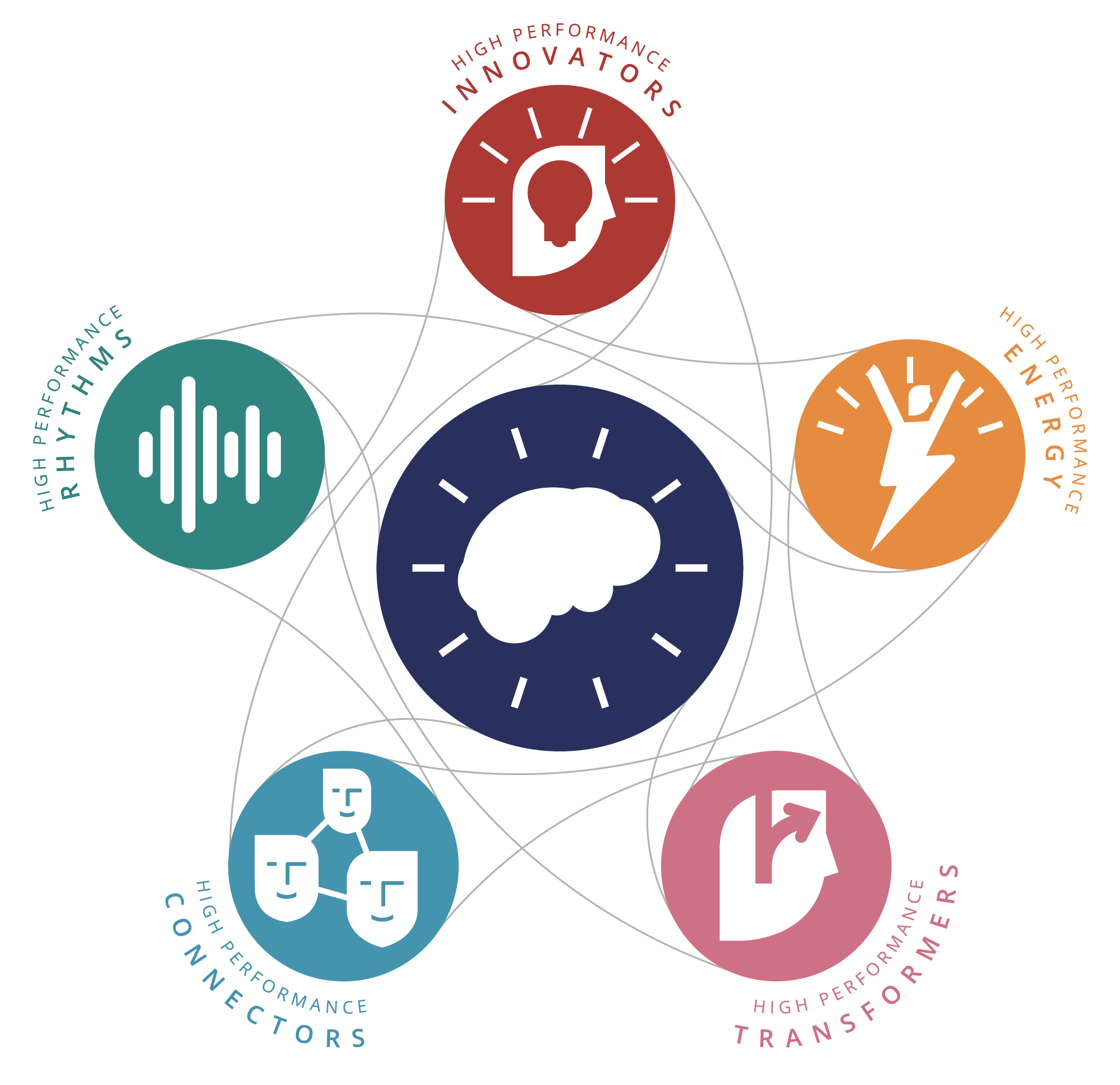
The assessment also measures 59 learnable neurobehaviors, defined as behaviors, cognitive states, and emotional states. These are organized into five Domains of High Performance:
High Performance Rhythms • High Performance Connectors • High Performance Energy • High Performance Transformers • High Performance Innovators
Rather than simply identifying high and low scores, the assessment considers the relationship between these neurobehaviors and the individual’s NRI. This helps identify which neurobehaviors represent areas to maintain and which offer opportunities to develop resilience and the capacity for High Performance.
The assessment also includes short scales relating to six organizational outcomes for employed users: absenteeism, burnout, employee engagement, job performance, job satisfaction, and turnover intentions. These results are collected for ongoing research and are not reported in the individual’s Neurozone® Personal Report.

Key Technical Properties
The Neurozone® Personal Assessment has been developed and tested using established psychometric methods. Its two core measurement components, the Neurozone® Resilience Index (NRI) and the Battery of Learnable Neurobehaviors, have undergone reliability and validity testing.
The NRI is a peer-reviewed assessment tool consisting of 28 self-report items. Reliability testing demonstrated high reliability for the Positive Affect and Early-Life Stability components and acceptable reliability for Stress Mastery. Its validity has been tested across multiple studies, including concurrent, convergent, and incremental validity.
The Battery of Learnable Neurobehaviors consists of 59 constructs, with each construct functioning as a mini-scale within the broader assessment. Reliability testing showed very good reliability overall, and validity testing found that all constructs demonstrated a statistically significant positive relationship with the NRI.
Because resilience and the learnable neurobehaviors are considered dynamic rather than stable traits, the assessment does not use traditional norms or standard error of measurement for interpretation. Instead, the Personal Report provides a Neurozone® User Average for the NRI, based on first-time NRI scores from the Neurozone® user base over the preceding 12 months.
The assessment is administered digitally, takes approximately 25 minutes, and must be completed in one sitting so that responses are provided under the same state or states. It is designed for adults aged 18 and older.
Resilience Index
At the core of the Neurozone® Personal Assessment is the Neurozone® Resilience Index (NRI), a peer-reviewed measure of an individual’s current level of psychological resilience.
The NRI consists of 28 questions and measures three components: Positive Affect, Stress Mastery, and Perception of Early-Life Stability. It produces a score from 0 to 100, across five levels of resilience.
Resilience is treated as a dynamic capacity rather than a fixed trait. A person’s level of resilience can therefore change over time and circumstances, making the NRI useful for understanding resilience at a particular point in time and for reassessment over time.
The NRI has undergone extensive reliability and validity testing and has been studied in different populations and settings.
High Performance Domains
The Neurozone® Personal Assessment is grounded in research across neuroscience, psychology, systems biology, analytics, and behavioral science, with psychological resilience at the center of the Neurozone® framework.
The Neurozone® Resilience Index (NRI) has undergone extensive psychometric testing, including assessments of reliability, convergent validity, concurrent validity, and incremental validity. Its development and validation have also been published in the peer-reviewed International Journal of Testing.
The Battery of Learnable Neurobehaviors has undergone reliability and validity testing, with all 59 constructs demonstrating a statistically significant positive relationship with the NRI. The selection and development of these neurobehaviors are also informed by existing scientific literature and expert input.
Research into the assessment is ongoing, with data from its use contributing to continued investigation of resilience, learnable neurobehaviors, and relevant organizational outcomes.

The Science Behind the Assessment
The Neurozone® Personal Assessment is grounded in research across neuroscience, psychology, systems biology, and behavioral science, with psychological resilience at the center of the Neurozone® framework.
The Neurozone® Resilience Index (NRI) has undergone psychometric development and validation, including testing for reliability and multiple forms of validity. The development and validation of the NRI has also been published in the peer-reviewed International Journal of Testing.
The broader battery of learnable neurobehaviors has also undergone reliability and validity testing, providing scientific support for the constructs measured within the Neurozone® Personal Assessment.



Technical Manual
For those who require a deeper understanding of the assessment, the Neurozone® Personal Assessment Technical Manual provides detailed information on its scientific and psychometric foundations.
The manual covers the development of the assessment, its theoretical framework, measurement structure, scoring methodology, reliability and validity, normative data, and interpretation of results.
It also provides technical detail on the Neurozone® Resilience Index and the neurobehavioral components measured across the five High Performance Domains.
Protect mental health
Build resilience
Unlock high performance