What do we call ‘Resilience’?
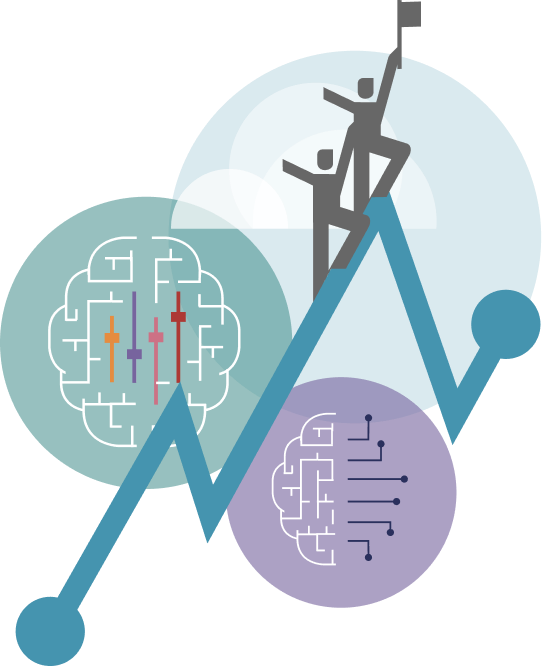
Resilience is the ability to successfully cope with stress or adversity. This includes both recovering after encountering stressors ('bouncing back') and improving resources to handle future challenges ('bouncing forward').
Resilience is complex, shaped by neurobiological, psychosocial, and developmental factors. It is also dynamic, influenced by changing internal processes like states and traits, and external conditions such as environments and events.
Therefore, a person's resilience can vary over time and with different circumstances.
What is the Neurozone Resilience Index?
Developed over five years, the Neurozone® Resilience Index has been extensively studied, validated, and established as reliable across diverse groups and markets. This includes professionals, adults in the workplace, students from various income levels and adolescents. Our data comes from multiple countries including Australia, the US, and South Africa, demonstrating a stable predictive pattern in resilience measurement.
The Neurozone® Resilience Index provides predictive outcomes
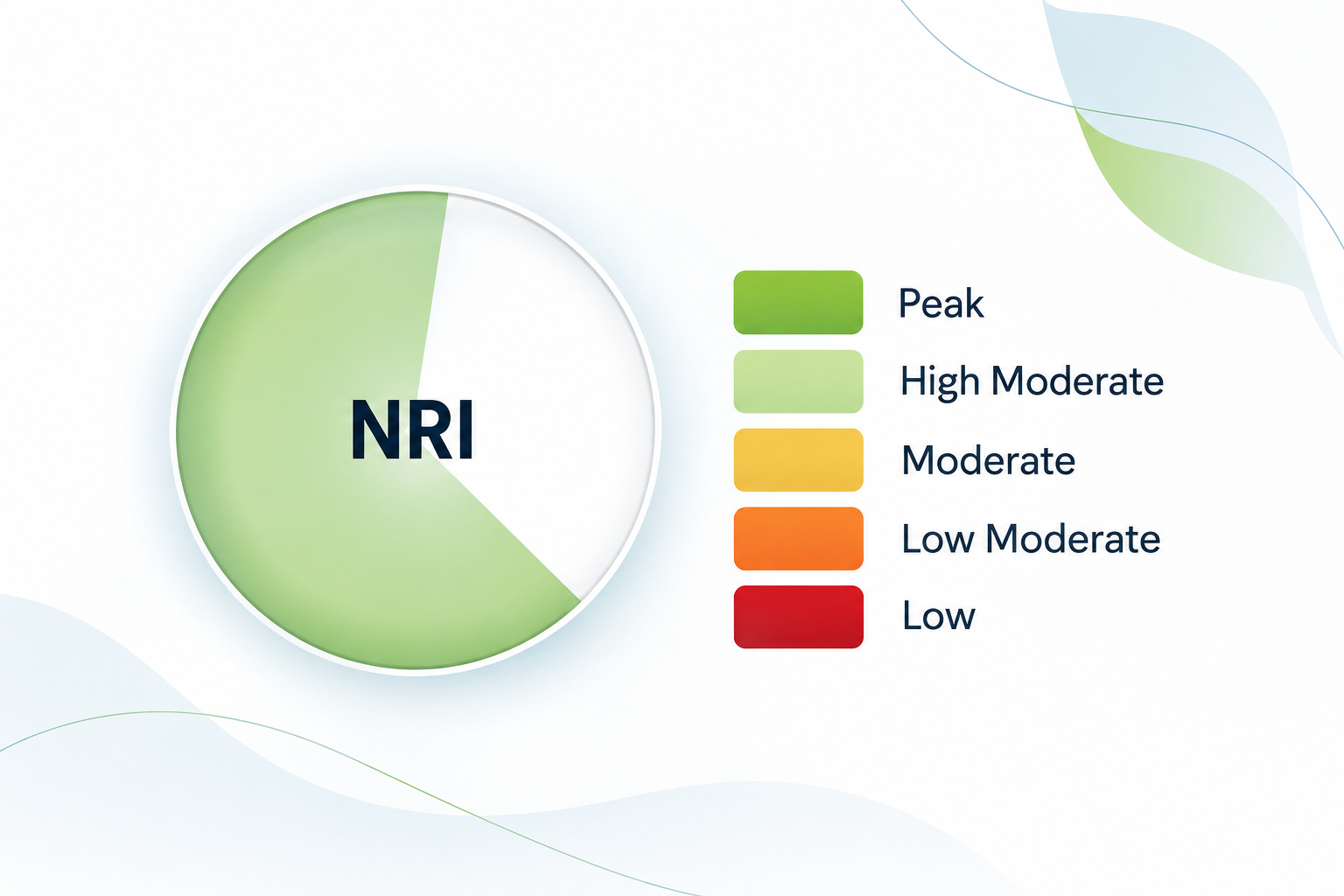
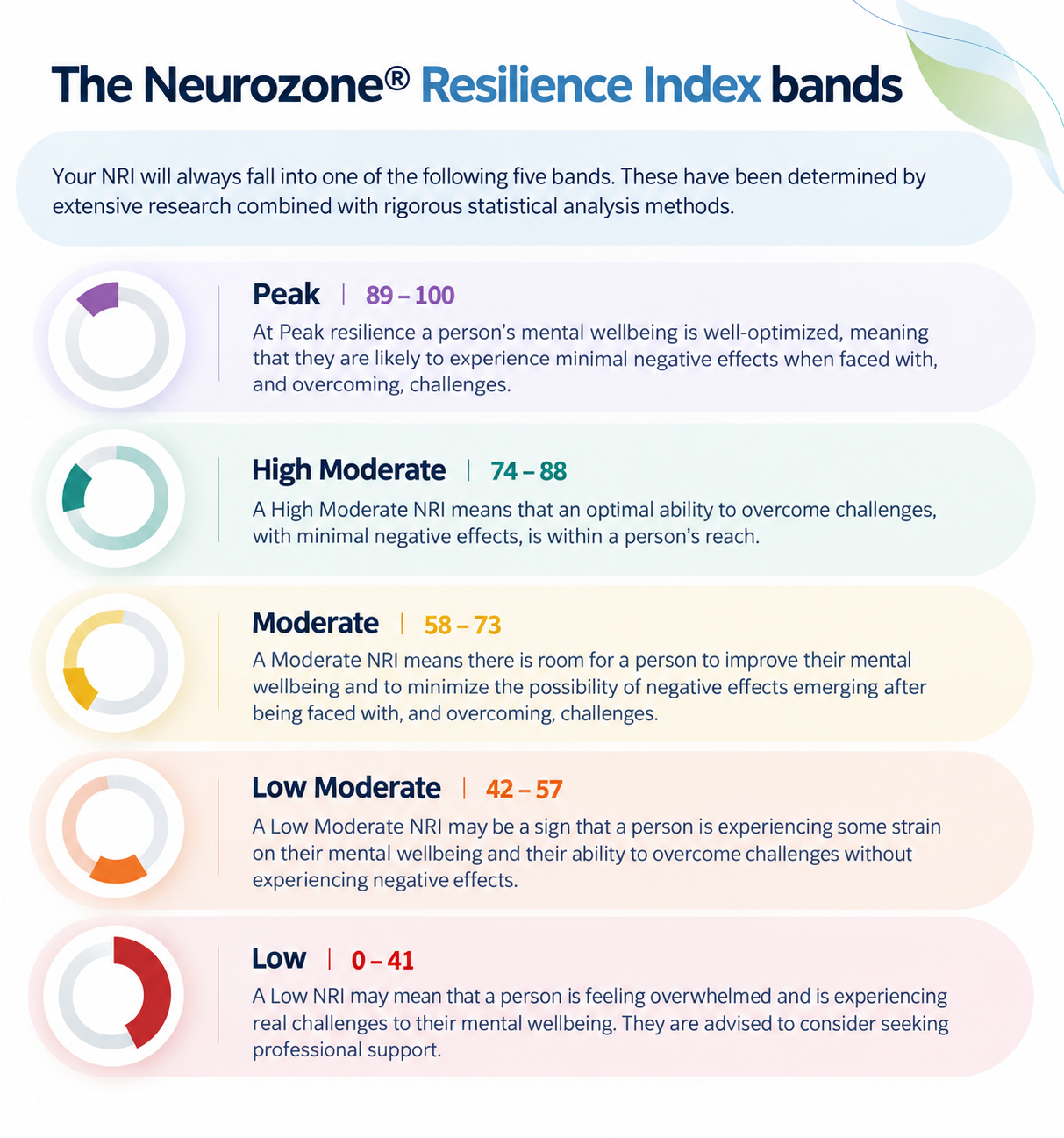
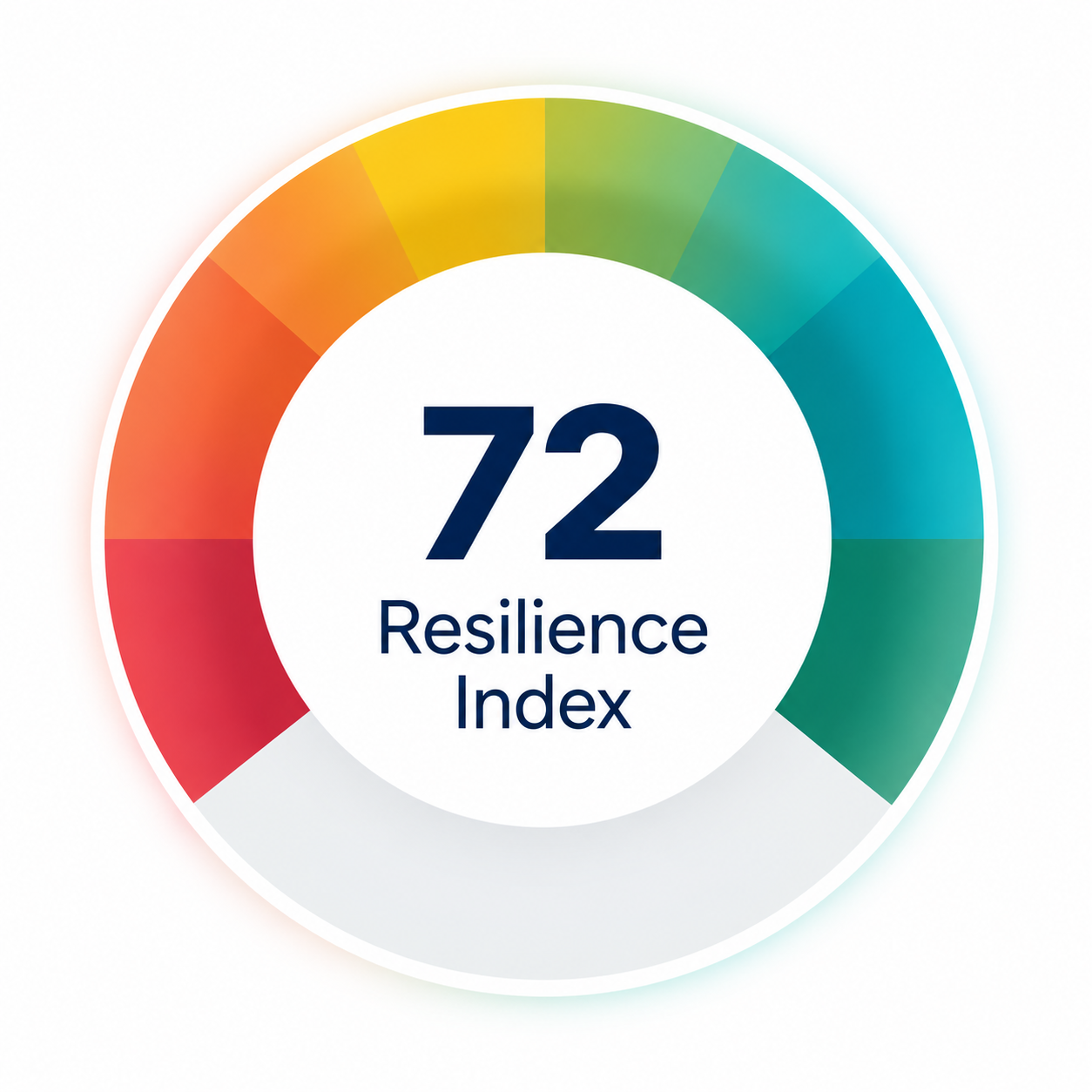
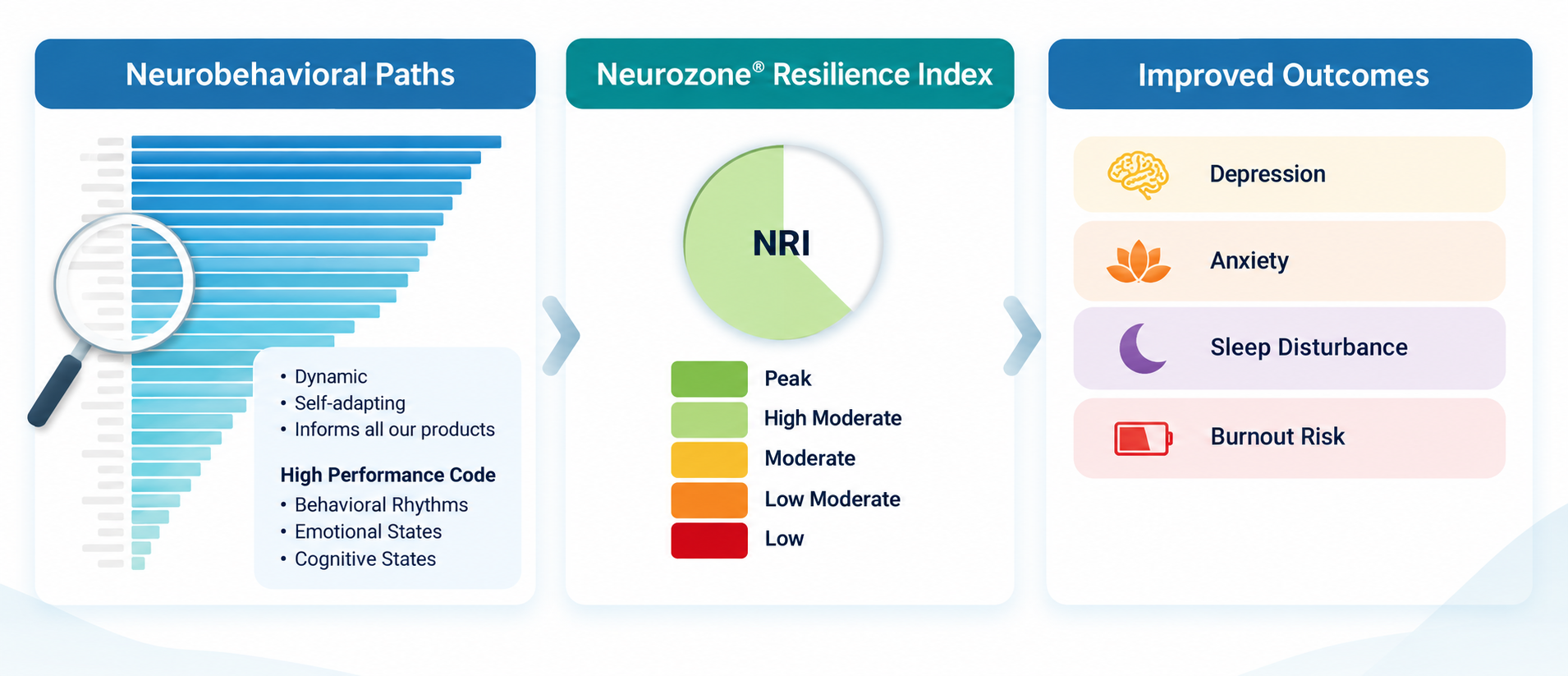
The Resilience Index has been anchored into mental health outcomes such as depression, anxiety, insomnia, and burnout risk. Using international clinical measures, we've developed cut-off scores to indicate different levels of resilience:
-
Peak Resilience: Indicates a very low risk of developing mental health issues and burnout. Individuals with peak resilience are well-protected mentally and require no immediate intervention.
-
Low Resilience: Suggests a high risk for mental health disorders and burnout. For individuals in this category, we strongly recommend therapy to address these risks.
-
High Moderate, Moderate, and Low Moderate Resilience: Each level comes with tailored recommendations for support and intervention. For example, low moderate resilience may require individual therapy and coaching, while high moderate resilience might only need group coaching.
.png "NRI Performance placemat_2024_v12 (1)")
The Resilience Index can be assessed quickly and efficiently
The Resilience Index can be assessed quickly and efficiently in just three minutes using a 28-question, 5-point Likert scale questionnaire. It measures three key components:
-
Stress Mastery: How effectively an individual manages stress.
-
Positive Affect: The presence of positive emotions and outlook.
-
Perception of Early Life Stability: How stable an individual perceives their early life experiences to have been.
This dynamic measure adapts in real-time to changes in an individual's environment, providing an ongoing and accurate assessment of resilience.

Our Resilience Index is anchored in science
The Explore our published works and validations:
Detailed research on the validation and reliability of the Neurozone® Resilience Index.
A peer-reviewed article demonstrating the disease-modifying capacity of resilience as measured by the Neurozone® Resilience Index.
An in-depth look at our pooled data demonstrating the stability and predictive accuracy of the Neurozone® Resilience Index.
A study on how neuro-behaviors adapt and prioritize in response to changing workplace environments.
Research showing how the Resilience Index supports academic success among students.
Details of the validation of the Neurozone® Burnout Index, measuring risk for Burnout.
Pooled Research demonstrating how the Neurozone® Resilience Index can be used to predict various Mental Health outcomes.
Protect mental health
Build resilience
Unlock high performance